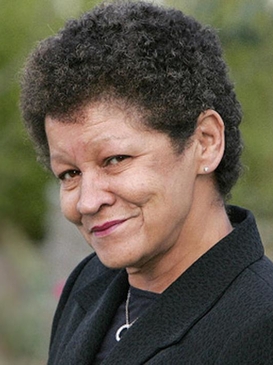
Christine Buckley: Orphanage Survivor to Iconic Irish Campaigner
The name Christine Buckley resonates deeply within the fabric of modern Irish history, synonymous with courage, resilience, and an unwavering commitment to justice. Her life story is a powerful testament to the human spirit's ability to transcend unimaginable trauma, transforming personal suffering into a catalyst for profound national change. From the grim realities of an institutionalized childhood to her emergence as an iconic voice for survivors of state child abuse, Christine Buckley forced a nation to confront its darkest secrets. Yet, beyond her powerful activism, a lesser-known facet of her life reveals a talented actress who graced some of Britain's most beloved television screens.
The Shadow of Goldenbridge: A Childhood of Unimaginable Hardship
Born in 1946, Christine Buckley entered a world where societal stigma and harsh judgments dictated her earliest years. In the rigid, pious Ireland of the mid-20th century, her origins were immediately a mark against her: she was labelled "illegitimate," "half-caste" (born to an Irish mother and a Nigerian father), and ultimately, abandoned. This was an era where the fate of such children was often sealed within the walls of institutions, far from public scrutiny and compassion.
Her childhood was spent within the chilling confines of Goldenbridge orphanage in Dublin's Inchicore. Here, the tender years that should have been filled with love and care were instead marked by terror and relentless cruelty. Buckley was not a child with a name, but a "number," subjected to a brutal regime that inflicted endless beatings, casual cruelties, and verbal lacerations designed to strip away dignity and self-worth. Harrowing accounts from her time include being scalded, witnessing infants strapped to potties for extended periods, and sustaining a hundred stitches in her leg after one particularly savage beating.
Forced labour was another grim reality, with children like Christine compelled to produce a quota of 60 sets of rosary beads daily – a task imbued with a bitter irony given the supposed religious context of the institution. This systemic abuse was not an isolated incident; it was part of a widespread pattern within Irish institutions, a reality that appalled even external observers like Irish-born Fr. Edward Flanagan of Boys' Town in the US, who famously called the conditions a "disgrace to the nation." Christine Buckley's early life laid bare the devastating human cost of a society that turned a blind eye to the suffering of its most vulnerable. Her survival of this period is a testament to her innate strength and resilience, qualities that would later define her public life.
From Healing Others to Healing a Nation: Christine Buckley's Journey Beyond the Asylum
Against all odds, Christine Buckley did not remain trapped by her past. The second phase of her life marked a remarkable transition, first into a career dedicated to care and compassion, and then into a fierce battle for justice. She embarked on a path as a nurse, a vocation that took her far from Goldenbridge, both geographically and emotionally. Her early nursing years in Drogheda are remembered as a period of relative light and happiness; those who knew her then recall someone who was "the life and soul of the party."
Her commitment to nursing led her across Europe and back to Ireland. She honed her skills in London, Innsbruck, Munich, and Jersey before returning to Dublin, where she specialised in midwifery at the Rotunda Hospital. She subsequently worked at the Coombe, Our Lady’s Hospital for Sick Children, and Cherry Orchard, demonstrating a particular love for nursing children – a poignant contrast to her own childhood experience. This period of her life saw her build a family of her own. In 1975, she met journalist Donal Buckley at Dublin’s Zhivago nightclub, and they married in 1977, going on to have three children: Clíona, Darragh, and Conor.
However, the past, though suppressed, was not forgotten. In the early 1980s, after a period of illness, a then 37-year-old Christine began to seek answers about her origins. Her quest for identity uncovered the truth of her mother’s situation – a 31-year-old separated woman – and ignited a deeper understanding of the societal forces that had shaped her early life. This personal journey of discovery became the critical pivot point, transforming her from a survivor into an indomitable advocate. This shift marked the beginning of Christine Buckley's iconic campaign, where she truly became Christine Buckley: The Irish Hero Who Exposed State Child Abuse.
A Voice for the Voiceless: Christine Buckley's Iconic Campaign against Abuse
The final and most defining chapter of Christine Buckley’s life was her emergence as a powerful and unrelenting campaigner. Armed with the truth of her past and an unshakeable resolve, she became a warrior against injustice, refusing to let the suffering of thousands of institutional abuse survivors remain hidden. Her personal narrative, delivered with searing honesty and compelling strength, resonated across Ireland, breaking decades of silence and complicity.
Christine Buckley didn't just tell her story; she forced an entire nation to listen, look itself in the mirror, and confront the profound shame of its past. Her advocacy was instrumental in "shifting a culture on its axis," paving the way for official investigations, apologies, and belated attempts at redress for the countless children who endured similar fates. Her tenacity, intelligence, and moral courage helped to dismantle the prevailing narrative that protected perpetrators and silenced victims. Buckley's impact was not merely about exposing wrongdoing; it was about validating the experiences of survivors, restoring their humanity, and demanding accountability from both religious orders and the state.
Her tireless work and public testimonies were crucial in raising awareness and fostering an environment where survivors felt empowered to come forward. Her legacy lies not only in the legal and governmental changes she helped instigate but also in the profound shift in national consciousness she inspired, ensuring that such abuses could never again be ignored. Her bravery serves as a powerful lesson in the importance of individual courage in driving collective social change. Understanding her advocacy offers valuable insights into the dynamics of social justice movements and the enduring power of a single voice.
Beyond Activism: Christine Buckley's Lesser-Known Acting Career
While Christine Buckley is rightly celebrated for her groundbreaking activism, a surprising and lesser-known aspect of her life was her career as an actress. Before, during, and perhaps even after some of her most intense campaigning, Buckley graced television screens in a variety of character roles, predominantly in British dramas. This duality showcases a multifaceted woman who navigated distinct public personas, embodying different lives with remarkable versatility.
Her acting credits span several decades and include appearances in some of the UK's most beloved and enduring series. Fans might recall her as Mrs. Hall in the popular 1975 adaptation of All Creatures Great and Small, bringing warmth and authenticity to her role. She also made multiple appearances in the iconic soap opera Coronation Street between 1976 and 1984, taking on various roles such as Florrie Banks, Mrs. Tillotson, Mrs. Conroy, and a woman in a café, demonstrating her ability to inhabit diverse characters within a single production. Similarly, she played Mrs. Applebee in a 1975 episode of Emmerdale Farm, another staple of British television.
Her additional acting work included roles in series such as The Practice (as Mrs. Crook), Threads (as a Woman in Supermarket), Juliet Bravo (Alice Harris), My Father's House (Mrs. Tate), and a nine-episode run as Agnes Bickley in Crossroads. She also featured in ITV Playhouse, Me! I'm Afraid of Virginia Woolf, and Crown Court, among others. This dimension of her career offers a fascinating glimpse into a woman who lived a life far richer and more varied than her public image as a campaigner might suggest. It’s a testament to her talent and perhaps offered her a form of expression or escape from the profound weight of her personal history. For more on this, explore From Coronation Street to Emmerdale: Christine Buckley's TV Legacy.
Conclusion
Christine Buckley's life, tragically cut short in March 2014, was a journey from the deepest shadows of institutional abuse to the bright light of national heroism. She was a woman who was dealt a grim hand by fate but, through sheer force of will, rose above her suffering to become an icon. Her story is a powerful narrative of resilience, a testament to the fact that even the most profound personal pain can be transformed into a force for immense good. Christine Buckley not only found her own voice but also amplified the voices of countless others, leaving an indelible mark on Ireland's conscience and forever changing the way the nation confronts its past. Her legacy endures as a beacon of hope and a potent reminder of the transformative power of truth and courage.