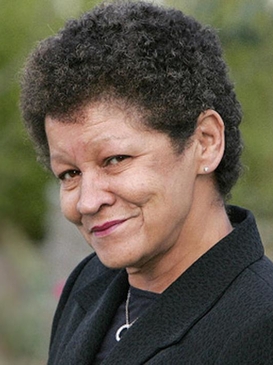
Christine Buckley: The Irish Hero Who Exposed State Child Abuse
The name Christine Buckley resonates deeply in Ireland, synonymous not only with resilience and courage but also with a monumental struggle for justice. While many might recognize her from her acting roles in popular British television series like
All Creatures Great and Small or
Coronation Street, it is her profound impact as a fierce campaigner against state child abuse that cemented her legacy as a true Irish hero. Christine Buckley's journey was one born of unimaginable hardship, transforming personal trauma into a powerful catalyst for national reckoning and reform, forever altering how Ireland confronted its dark past.
The Formative Years: A Childhood of Unimaginable Hardship
Born in 1946, Christine Buckley entered an Ireland steeped in social conservatism, where the circumstances of her birth immediately cast her into the shadows. Deemed "illegitimate" and "half-caste" – a pejorative term for children of mixed race – she was abandoned and relegated to the care of the state. This was an era when societal norms, heavily influenced by religious institutions, offered little compassion or support for children like Christine, who were often seen as a stain on the nation's pious image. Indeed, visiting American priest Fr Edward Flanagan, founder of Boys' Town, was appalled by the conditions of Irish institutions, branding them "a disgrace to the nation" – a statement that, remarkably, united all shades of Irish political opinion in uproar, not over the conditions but over the audacity of his observation.
Christine's early life unfolded within the grim walls of Goldenbridge orphanage in Dublin's Inchicore. Here, she was stripped of her identity, becoming merely a number rather than a name. Her childhood was not one of innocence or care, but a terrifying ordeal defined by a regime of relentless physical beatings – including one brutal incident that left her with 100 stitches in her leg – alongside casual cruelties, searing verbal abuse, scalding punishments, and the harrowing sight of infants restrained to potties. Dehumanization was systemic; she was led to believe her mother was a "whore" and her father a man named Willie West, both cruel fabrications. Forced labour, like producing 60 sets of rosary beads daily, highlighted the stark irony of faith-based institutions perpetrating such suffering. Christine Buckley’s experiences at Goldenbridge were not isolated incidents but emblematic of a widespread pattern of institutional abuse that scarred generations of Irish children. This era underscores the critical need for robust oversight and transparent accountability in any institution entrusted with the care of vulnerable individuals.
From Healing Others to Healing a Nation: Christine Buckley's Path to Advocacy
Despite the profound trauma of her early years, Christine Buckley possessed an indomitable spirit that allowed her to forge a new path. Her life, as often described, unfolded in three distinct acts: the dark years of Goldenbridge, followed by a lighter, happier period dedicated to nursing. She embarked on a career that allowed her to care for others, a stark contrast to the neglect she had endured. Christine nursed in various locations, including Drogheda, London, Innsbruck, Munich, and Jersey, eventually returning to Dublin to specialize in midwifery at the Rotunda hospital, and later working at the Coombe, Our Lady’s Hospital for Sick Children, and Cherry Orchard. Those who knew her from Drogheda remember her as the "life and soul of every party," a testament to her resilience and capacity for joy despite her hidden wounds. Her particular love for nursing children was perhaps a poignant reflection of her own deprived childhood, a desire to offer the care she never received.
In 1975, Christine found personal happiness, meeting journalist Donal Buckley at Dublin’s Zhivago nightclub. They married in 1977 and built a family, raising three children: Clíona, Darragh, and Conor. This period of stability and love provided the foundation upon which her later, more public work would be built. However, it was a bout of illness in the early 1980s, when she was 37, that prompted Christine to embark on a quest to understand her origins. This personal journey of discovery, uncovering the truth about her birth to a 31-year-old separated mother, was not just about her own identity; it was the spark that ignited her unwavering commitment to expose the systemic injustices she and countless others had suffered. Her courageous exploration of her past paved the way for her future as an advocate, demonstrating how personal healing can empower individuals to fight for broader societal change.
A Warrior Against Injustice: Exposing the Truth
The later decades of Christine Buckley's life marked her transformation into a formidable public figure, a "warrior against injustice," as her husband aptly described her. This was the "intense" period where she "shifted a culture on its axis and forced Ireland to look at itself in the mirror and admit the shame." Her decision to speak out publicly about the horrific abuses she endured at Goldenbridge, and by extension, within the broader system of institutional care in Ireland, was nothing short of revolutionary. In a society still grappling with silence and denial, Christine Buckley’s voice became a beacon for countless other survivors.
Her advocacy wasn't just about sharing her personal story; it was about demanding accountability. Christine tirelessly campaigned for government inquiries, gave powerful testimonies, and became a figurehead for the survivors' movement. She was instrumental in raising public awareness and pressuring the Irish state to confront the widespread abuse in its industrial schools, orphanages, and Magdalene laundries. Her intelligence, tenacity, and unwavering character shone through as she navigated political resistance, public skepticism, and the immense personal toll of reliving her trauma. The eventual establishment of inquiries, most notably the Ryan Report (Commission to Inquire into Child Abuse), which published its findings in 2009, stands as a direct testament to the relentless efforts of Christine Buckley and fellow campaigners. These reports, though harrowing, laid bare the appalling realities of institutional abuse, marking a pivotal moment in Irish history. For a deeper dive into her relentless activism and its profound impact, you might be interested in reading
Christine Buckley: Orphanage Survivor to Iconic Irish Campaigner. Christine's courage created a space for truth, enabling thousands of survivors to come forward and finally seek validation and, for some, a measure of justice.
Beyond the Trauma: Christine Buckley's Enduring Legacy
Christine Buckley's impact on Irish society is immeasurable. She didn't just expose state child abuse; she helped to dismantle a culture of silence, shame, and denial that had allowed such atrocities to persist for decades. Her bravery paved the way for acknowledgment, apologies from the state, and the beginnings of redress schemes for survivors. She exemplified how an individual, empowered by their truth and driven by an unshakeable commitment to justice, can force an entire nation to confront its darkest chapters. Her legacy ensures that the voices of survivors are heard and that their suffering is never forgotten, serving as a powerful reminder of the imperative to protect vulnerable children.
Beyond her profound activism, Christine Buckley also led a varied and interesting life, even gracing television screens in a different capacity. For those who knew her primarily as a campaigner, it might be surprising to learn of her significant acting career. She played roles such as Mrs. Hall in the beloved
All Creatures Great and Small (1975), and appeared in other iconic British series like
Coronation Street (as Florrie Banks, Mrs. Tillotson, Mrs. Conroy, and Woman in Cafe across 8 episodes between 1976 and 1984) and
Emmerdale Farm (as Mrs. Applebee in 1975). Her extensive acting credits included roles in
The Practice,
Threads,
Juliet Bravo,
Crossroads, and numerous other television productions, showcasing a versatility that often went unmentioned in the context of her advocacy. To learn more about this fascinating facet of her life, explore
From Coronation Street to Emmerdale: Christine Buckley's TV Legacy. This duality of her public life – both a celebrated actress and a formidable activist – further highlights the depth and complexity of Christine Buckley, an extraordinary woman who navigated different worlds with integrity and strength.
Conclusion
Christine Buckley passed away on March 11th, 2014, but her spirit and her work continue to inspire. Her life was a powerful testament to the human capacity for survival, resilience, and transformation. From a childhood marked by extreme cruelty and institutional abuse, Christine Buckley rose to become a beacon of hope and a tireless advocate, forcing a nation to confront uncomfortable truths and paving the way for a more just and accountable society. She was, without doubt, a 21st-century Irish hero, whose unwavering commitment to justice ensures that the lessons of the past are never forgotten, and that the voices of survivors will always be heard.